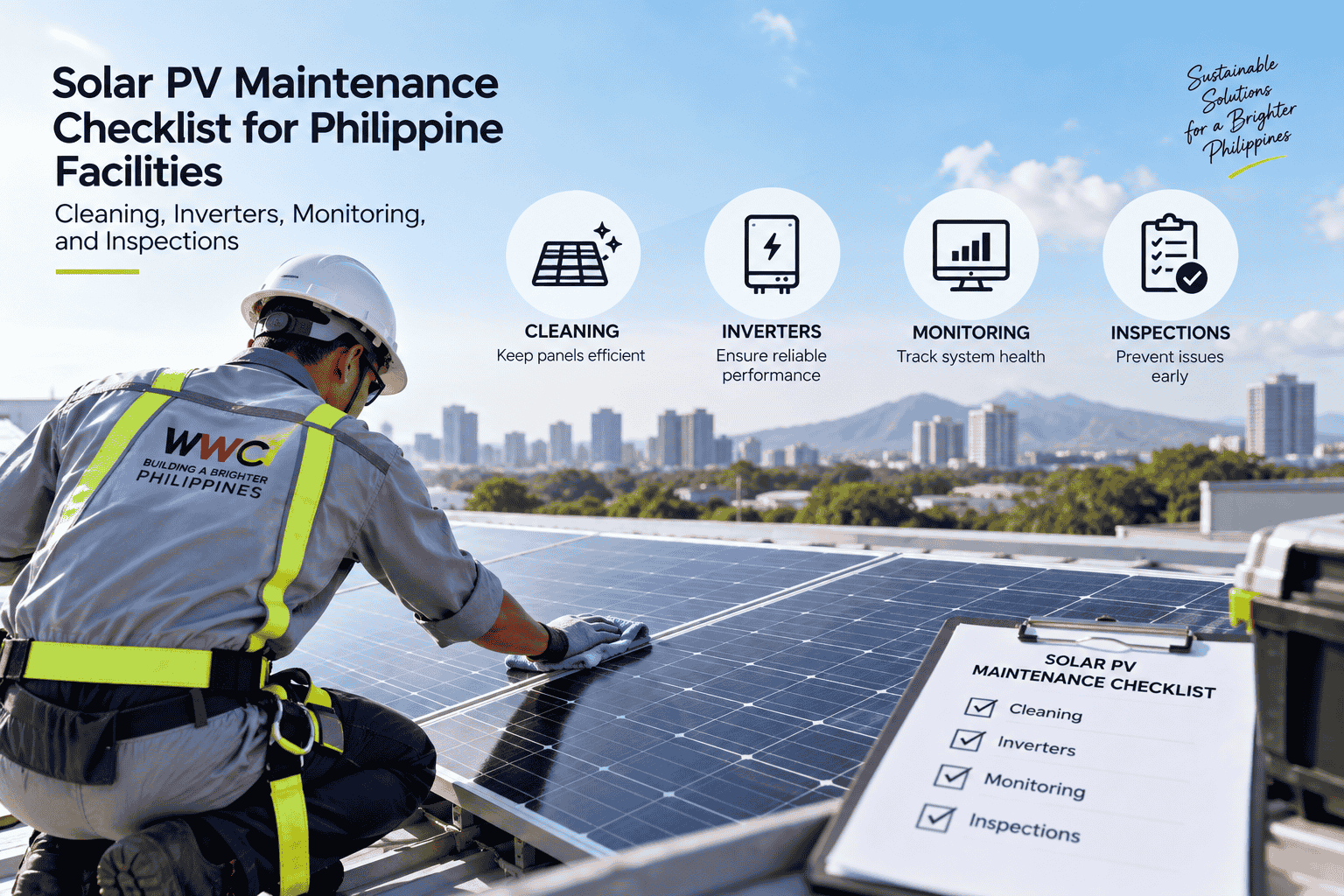
Solar PV Maintenance Checklist for Philippine Facilities: Cleaning, Inverters, Monitoring, and Inspections
· 5 min read
By Shine Mae Arevalo
Solar photovoltaic (PV) systems are designed for long-term operation, but reliable performance depends on proper installation, regular monitoring, and preventive maintenance. Routine maintenance helps identify potential issues before they affect system performance and allows facility owners and operators to respond to problems more effectively.
Solar panel cleaning is one of the basic maintenance activities for a PV installation. Dust, leaves, debris, and other materials can accumulate on module surfaces and affect the amount of sunlight reaching the panels. The appropriate cleaning approach and frequency depend on the site's environment, weather conditions, surrounding activity, and the amount of material accumulating on the modules.
Visual inspections are also important. Maintenance personnel should look for visible damage, unusual conditions, loose components, corrosion, and other signs that may require further attention. Mounting structures and other physical components should also be checked as part of routine system inspection.
Inverters are another important part of a solar PV system. They convert the electricity produced by the solar modules into a form that can be used by the facility or connected to the electrical system. Checking inverter status, alarms, operating conditions, and available performance information can help identify unusual conditions early.
The system's electrical components and protective devices should also be inspected by qualified personnel. Connections, wiring, control equipment, and protection devices need appropriate attention because electrical problems can affect system reliability and safety. Any inspection or corrective work should follow applicable safety procedures and technical requirements.
Solar monitoring provides another way to identify potential problems. Reviewing production data and system alerts can help operators notice unusual changes in performance. A sudden or unexplained change in production may be a reason to investigate the panels, inverter, electrical system, monitoring equipment, or other parts of the installation.
A practical solar PV maintenance program should combine routine observation with scheduled inspections and professional preventive maintenance. Rather than relying only on repairs after a problem occurs, facilities can use monitoring information and inspection findings to identify conditions that need attention and plan maintenance activities accordingly.
A simple maintenance checklist can include panel condition and cleanliness, mounting structures, inverter status, electrical components, protective devices, monitoring equipment, system alerts, and unusual changes in energy production. Keeping records of inspections and maintenance activities can also help organizations track recurring issues and support future maintenance planning.
Maintenance requirements can vary between solar installations. Site conditions, system design, equipment, environmental exposure, and operating conditions can all affect the appropriate maintenance approach. For this reason, facilities should follow the system's technical documentation and have electrical and technical work performed by appropriately qualified personnel.
For organizations planning or operating a solar PV installation, preventive maintenance should be considered part of the system's overall lifecycle—not simply an activity performed after a failure. Proper inspection, cleaning, inverter checks, electrical maintenance, and monitoring can help facilities maintain visibility over system condition and address potential issues before they become larger problems.
A practical solar PV maintenance checklist should include panel condition and cleanliness, mounting structures, inverter status, electrical connections, protective devices, monitoring equipment, system alerts, and unusual changes in energy production. Keeping a record of inspection findings and completed maintenance activities can help facility operators track recurring issues and plan future maintenance work.
Routine monitoring should be part of the maintenance process. Facility operators can review available system data and alerts to identify unusual changes in solar production or equipment status. Monitoring does not replace physical inspection, but it can provide an early indication that a system requires further investigation.
Inverter and electrical inspections require particular attention. Inverters, wiring, connections, control equipment, and protective devices should be checked as part of scheduled maintenance by appropriately qualified personnel. Any unusual alarm, visible damage, or abnormal operating condition should be investigated according to the equipment documentation and applicable safety procedures.
Maintenance records are useful for long-term system management. Facilities can document inspection dates, cleaning activities, observed conditions, equipment alerts, corrective actions, and other maintenance work. These records can help identify recurring problems and provide a reference when planning future inspections or servicing.
Based on the CVMC project documentation we reviewed, WWC was involved in a 50 kW grid-tied solar PV installation that included supply, delivery, installation, and commissioning. The project documentation also included preventive maintenance requirements. This decumented examples shows why installation, commissioning, monitoring, and maintenance should be considered together when planning the lifecycle of a solar PV system.
Solar PV Maintenance Checklist Facilities can use the following checklist when planning routine solar PV maintenance: Panels: Check cleanliness, visible damage, and physical condition. Mounting structures: Check for loose components, corrosion, or visible damage. Inverters: Check operating status, alarms, and available performance information. Electrical components: Check wiring, connections, control equipment, and protective devices. Monitoring: Review production data and system alerts. Inspections: Record inspection dates and observed conditions. Maintenance records: Document cleaning, corrective work, and other maintenance activities.
Solar PV maintenance should be treated as part of the overall lifecycle of a solar installation. Regular cleaning, inspections, inverter and electrical checks, monitoring, and maintenance records can help facility operators identify conditions that require attention and plan maintenance activities appropriately. Organizations planning or operating solar PV systems should consider maintenance requirements from the installation and commissioning stages and follow the technical documentation for their equipment and system.
Need Help With Your Solar PV System? Planning, installing, and maintaining a solar PV system requires proper attention to system condition, monitoring, electrical components, and preventive maintenance. WWC Yellow Bumblebee Corp. provides solar installation and monitoring services for organizations planning or operating solar PV systems. Contact WWC Yellow Bumblebee Corp. to discuss your solar installation or monitoring requirements.