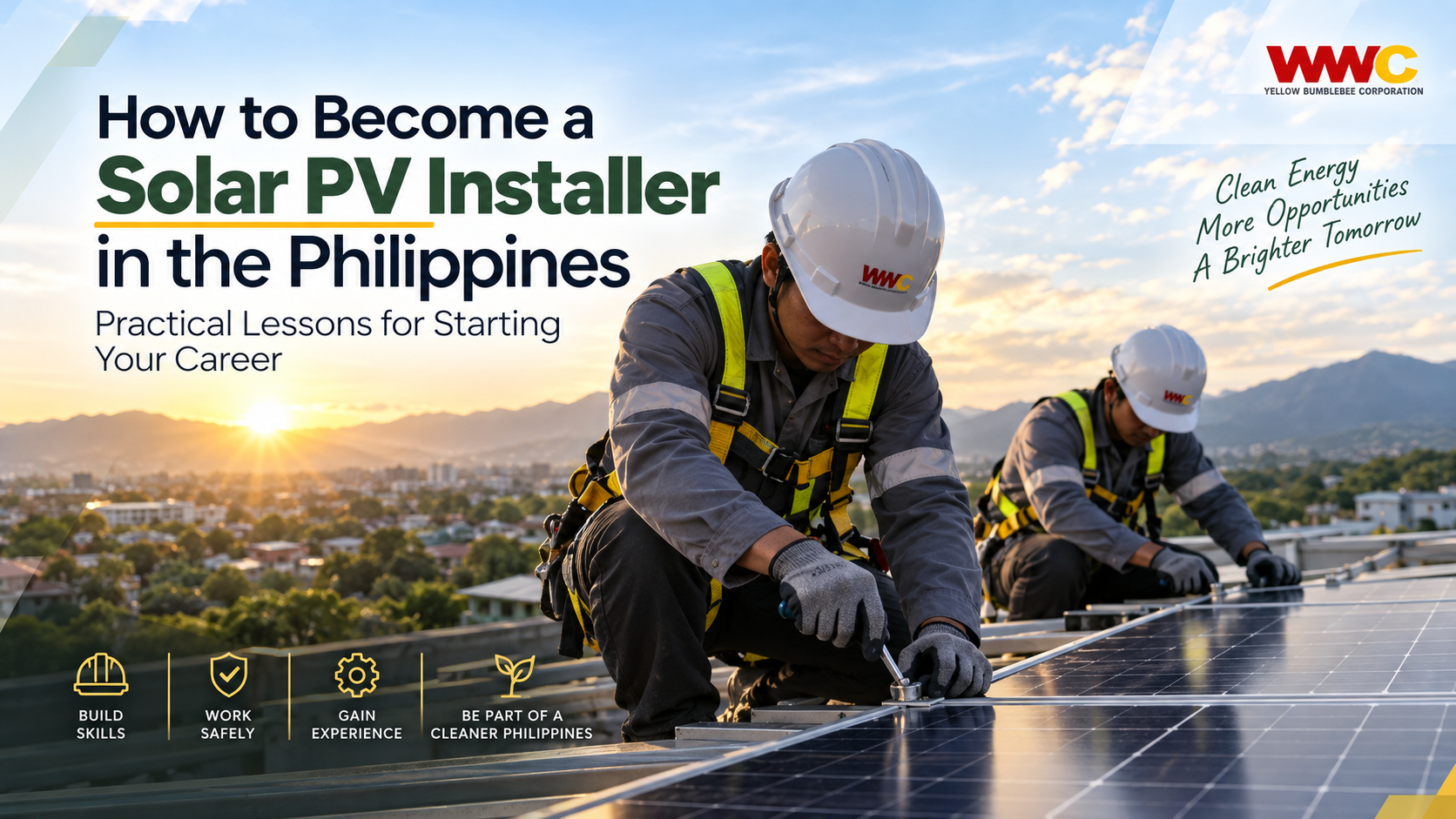
How to Become a Solar PV Installer in the Philippines: Lessons for Starting Your Career
· 6 min read
By Marjorie F. Jetajobe
As more homes, businesses, and large facilities in the Philippines adopt solar energy, the industry also needs people who can safely install, test, and maintain photovoltaic systems.For someone interested in electrical work, renewable energy, or hands-on technical careers, becoming a solar photovoltaic or PV installer can be a practical path into the clean-energy sector. But installing solar panels involves much more than mounting equipment on a roof. A good installer needs technical knowledge, attention to safety, accurate measurements, proper documentation, and the ability to work effectively with a team. Here are some of the most important lessons for anyone considering this career.
1. Start With the Right Technical Foundation
A solar PV installer works with electrical components, mounting structures, wiring, inverters, protective devices, and other equipment that must operate together safely.In the Philippines, TESDA offers the PV Systems Installation NC II qualification. Its training standards cover skills such as conducting site assessments, checking PV components and materials, installing systems, testing and commissioning them, and preparing installation documentation. The qualification also includes workplace communication, occupational health and safety, technical drawings, measurements, calculations, proper tool use, and equipment maintenance. For beginners, these fundamentals are just as important as learning how to physically install a solar panel.
2. Learn How to Read Plans and Specifications
Solar installation should never be based on guesswork.Before installation begins, technicians need to understand system layouts, electrical drawings, equipment specifications, installation instructions, and project requirements. An installer may need to identify where panels should be positioned, understand cable routes, verify equipment ratings, check mounting locations, and make sure the actual installation follows the approved design. TESDA's competency standards specifically include interpreting manufacturers' manuals, electrical plans, drawings, work instructions, and equipment specifications. Tesda Developing this habit early can help prevent costly installation errors later.
3. Treat Safety as Part of the Job, Not an Extra Step
Solar installation can involve working at height, handling electrical equipment, lifting materials, using power tools, and working outdoors under changing weather conditions.That means safety procedures should become part of an installer's normal routine. Before beginning work, technicians should understand the hazards of the site, use the appropriate personal protective equipment, inspect their tools, follow electrical safety procedures, and communicate clearly with the rest of the team. The goal should never be simply to finish an installation quickly. The goal is to complete it correctly and safely.
4. Understand That Installation Begins Before the Panels Go Up
One of the biggest misconceptions about solar work is that installation begins when technicians start mounting panels.In reality, much of the work begins earlier. A proper project may involve assessing the site, checking available space, identifying possible shading, verifying electrical conditions, reviewing structural considerations, checking equipment, preparing materials, and confirming the installation plan. TESDA identifies site assessment as one of the core competencies of PV Systems Installation NC II. A careful assessment helps the installation team understand the conditions they will actually encounter once work starts.
5. Details Matter More Than They Appear
Small mistakes can create large problems in technical projects.Loose connections, incorrect cable management, improperly positioned equipment, incomplete labeling, inaccurate measurements, or skipped inspections can affect system reliability and make future maintenance more difficult. Developing professional habits therefore matters from the beginning of your career. Check your work. Follow the design. Keep the work area organized. Protect cables and equipment. Complete required documentation. Ask questions when something in the plans or installation instructions is unclear. Reliable workmanship is built through consistency.
6. Learn Testing and Commissioning, Not Just Installation
Mounting the final solar panel does not mean the project is finished.Before a PV system is turned over, technicians need to verify that components have been installed correctly and that the system operates according to its design and equipment specifications. Testing and commissioning are therefore core parts of professional solar installation. TESDA's qualification includes functional testing, final system checking, installation reports, and verifying that the completed installation conforms with the installation plan. Learning why these tests are performed—not simply how to perform them—can make someone a much stronger technician.
7. Develop Skills Beyond Solar Panels
Strong solar technicians often build knowledge across several related areas.Electrical fundamentals, basic mathematics, construction practices, reading technical drawings, tool maintenance, troubleshooting, documentation, workplace communication, and teamwork all contribute to better performance on site. For those who want to continue developing their careers, TESDA also lists qualifications such as PV System Design NC III and PV Systems Servicing NC III, providing possible paths beyond entry-level installation work.
8. Get Real-World Experience
Training provides the foundation, but actual project experience teaches lessons that are difficult to reproduce in a classroom.Every site presents different conditions. Installers may encounter space limitations, weather challenges, unusual cable routes, equipment differences, coordination issues, or unexpected site conditions. Working alongside experienced electricians, engineers, supervisors, and technicians helps new installers understand how technical plans become real installations. It also teaches an important professional habit: when actual site conditions differ from expectations, communicate the issue instead of improvising a solution without approval.
Where Can You Train?
TESDA maintains a directory of registered training institutions offering PV Systems Installation NC II in different parts of the Philippines.Current listings include training centers in Metro Manila, Luzon, Visayas, and Mindanao, so prospective trainees can search for a registered program near them. Because training availability can change, applicants should confirm the current program schedule and admission requirements directly with TESDA or the registered training institution before enrolling.
A Career Built One Installation at a Time
Starting a career in solar does not require knowing everything on your first day.It requires a willingness to learn, respect for safety, attention to detail, technical discipline, and the patience to understand why each part of an installation matters. The solar industry ultimately depends not only on better technology, but also on skilled people who can install that technology properly. For aspiring technicians in the Philippines, developing strong fundamentals today can open opportunities to participate in the country's growing renewable-energy sector tomorrow.